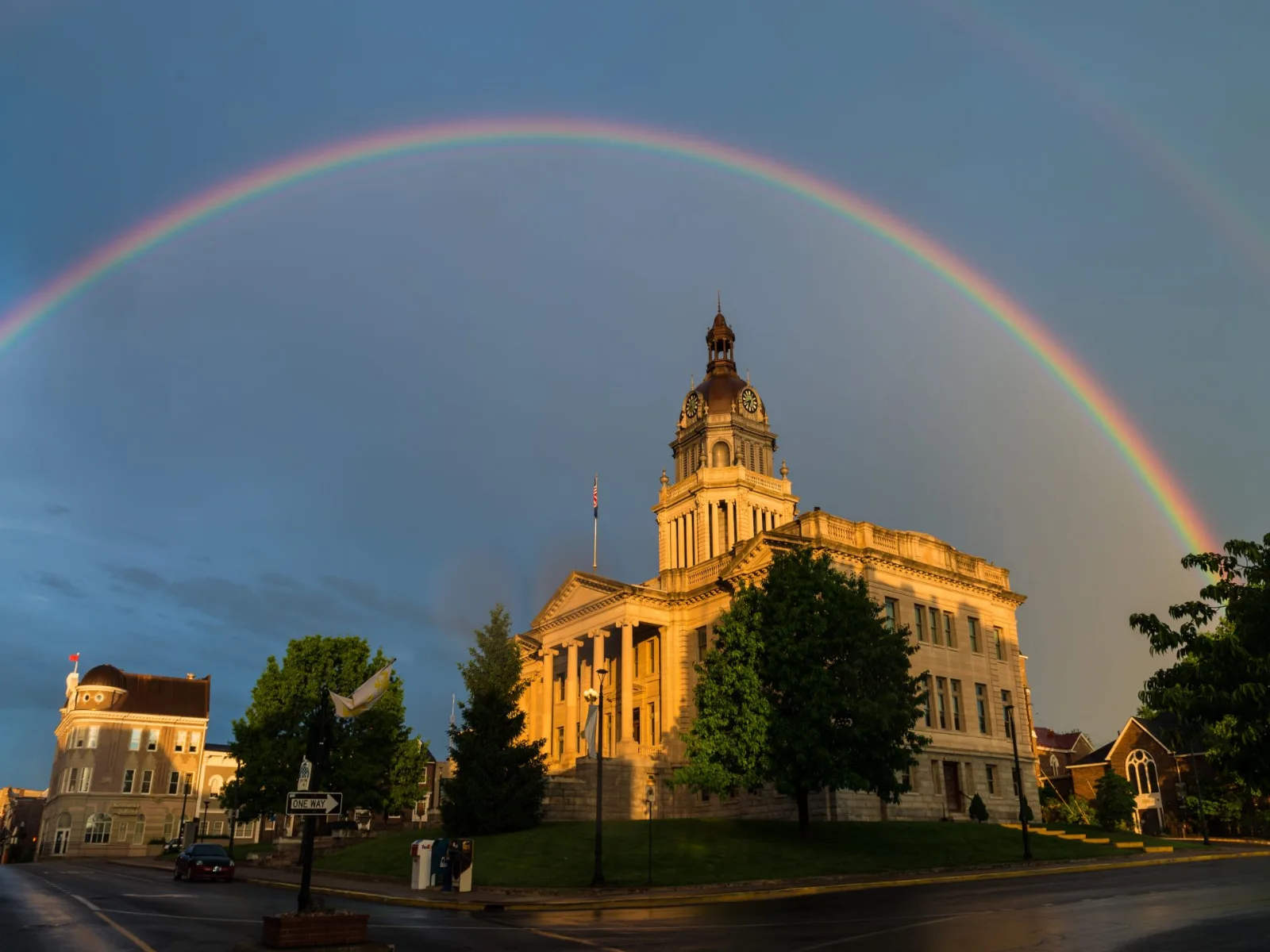
Paris is a historic, spirited, and evolving community with small town hospitality.
Key dates
- 1775Settled near Doyle Spring with Joseph Houston's Station
- 1785Bourbon County formed from Fayette County
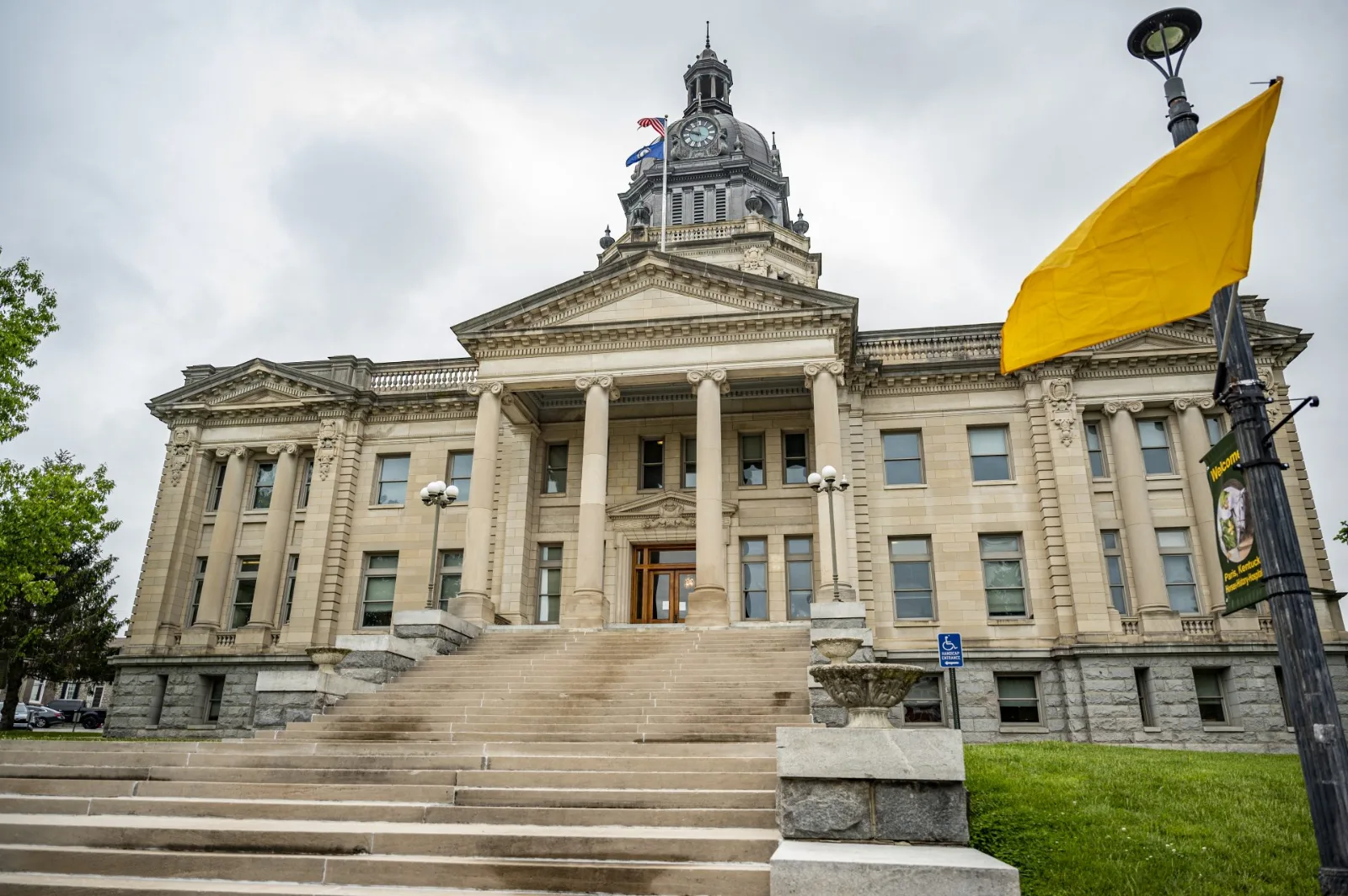
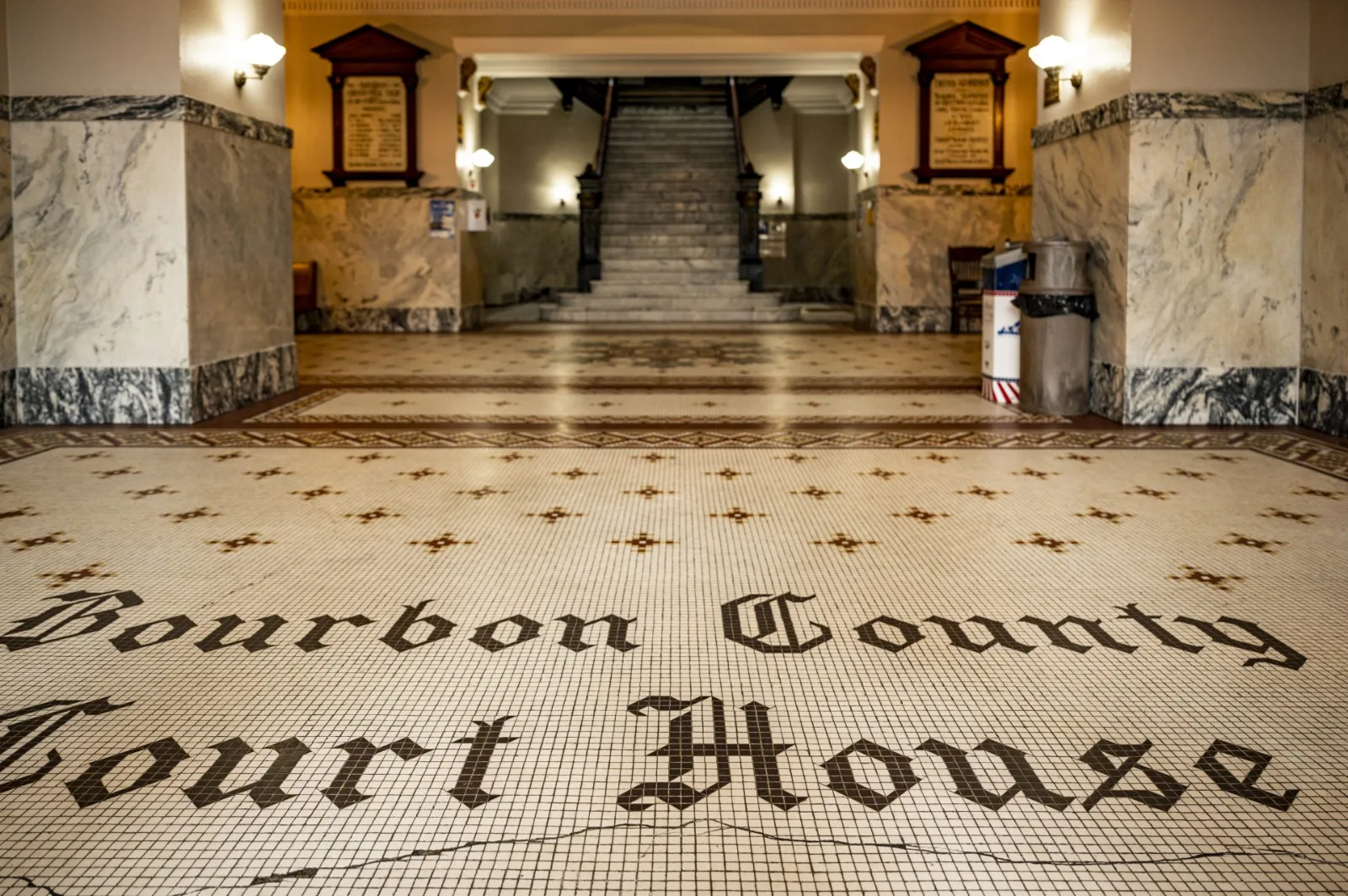
- 1787Bourbon County Courthouse completed (October)
- 1789Chartered as Hopewell by the Virginia Legislature
- 1790Name changed to Paris
- 1792Kentucky admitted to the Union (June 1)
- 1862Formally chartered by the Kentucky State Legislature; first Mayor elected April 5
- 2016Sister city partnership with Lamotte-Beuvron, France (April 26)
History of Paris: The Founding
Settled near Doyle Spring (later known as Hopewell Spring) in 1775 with Joseph Houston's Station and originally chartered in 1789 as Hopewell, Virginia, 250 acres at the Bourbon County Courthouse, which was completed October 1787, were ordered laid off into town lots and streets by the Virginia Legislature at the request of the citizens.
The town was probably named for Hopewell, New Jersey, hometown of Lawrence Protzman, the proprietor of the land on which the lots were laid out. Protzman had purchased the land from John Reed. James Garrard, Bourbon County's Representative on the Virginia Legislature, petitioned to change the name to Paris in 1790.
Bourbon County, formed 1785 from Fayette County, and its county seat were named for the French city and the Bourbon line of kings out of gratitude to the French for their assistance during the Revolutionary War.
On June 1, 1792, Kentucky was admitted to the Union as the fifteenth state and in 1794 the first post office opened as Bourbonton. It was renamed Paris by 1815. The town and Post office both have been referred to as Bourbonton and Bourbon Courthouse. Paris was formally chartered by the Kentucky State Legislature in 1862 and Maj. George W. Williams, 1812 war hero, was elected as the town's first Mayor on April 5, 1862.
The Earliest Record
The earliest record of the land on which Paris, Kentucky, stands was uncovered in an old suit over a military grant to one Walter Stewart for service as a sergeant in his Majesty's 44th Regiment of foot and agreeable to the Royal Proclamation of 1763, for 200 acres in Fincastle (later Bourbon) County. Col. John Floyd, who was the principal surveyor of the Transylvania Company and delegate to the Assembly that met at Boonsborough May 24, 1775, to make laws for the infant colony, acting as deputy surveyor to William Preston of Fincastle, surveyed this grant for Stewart in 1776.
He made his first location immediately in front of what is now the entrance to the old Duncan Home (Burr House) on a tree in the then wilderness. Overlapping land was preempted by John Reed of Maryland, James Galloway, and Samuel Lyon, who claimed as heir of Daniel Lyon.
The Petition, September 2, 1789
The petition for the establishment of Hopewell by the citizens of Bourbon County was signed September 2, 1789 and sent to the Virginia Legislature. Petition No. 2277, Archive Dept., Virginia State Library, pp. 18-20.
“…pray your Honorable body that a law pass for the establishment of a town agreeable to the manner the lots are now laid off…”
Petition of the Inhabitants of Bourbon County, 1789
Read the full petition and the Virginia Legislature’s response
"The petition of the Inhabitants of Bourbon County sheweth that the land whereon our present Courthouse now stands to the amount of two hundred and fifty acres is laid off in lots by the Proprietor, for the purpose of settling a town… we your petitioners conceiving it necessary that said town be established by law pray your Honorable body that a law pass for the establishment of a town agreeable to the manner the lots are now laid off and that trustees be appointed for the purpose of superintending and regulating of the building of said town and in duty Bound we pray."
The response of the Virginia Legislature:
"Be it enacted, That two hundred and fifty acres of land, at the Court House in Bourbon county, as are laid off into town lots and streets by Lawrence Protzman, the proprietor thereof, shall be established a town by the name of Hopewell, and that Notley Conn, Charles Smith Jr., John Edwards, James Garrard, Edward Waller, Thomas West, James Lanier, James Littell and James Duncan, gentlemen, are hereby constituted trustees thereof."
Building Paris
In 1797, famed builder Thomas Metcalfe laid the first foundation stone as construction of a new courthouse began on the town square, which was occupied the following year. It replaced the log cabin structure that had burned down.
While most of the large homes were of brick and stone construction, log cabins and frame homes were plentiful. Builders used oak and hackberry lumber for exteriors and ash for flooring. Cherry and walnut were used for furniture, cabinetry and paneling.
By 1808, Isaac Hall operated a brick kiln in Paris. By 1810 Paris had 838 residents and 1217 in 1830. William Holmes McGuffey taught school on High Street from 1823 to 1826 before joining the faculty at Miami University.
Despite the anti-slavery movement in Paris and Bourbon County, by 1850 the number of slaves totaled more than half of the county population. It would take war to finally bring an end to the practice of slavery.
People Who Shaped the Community
Maj. George W. Williams
1812 war hero, elected the town's first Mayor on April 5, 1862.
Thomas Metcalfe
Famed builder who laid the first foundation stone of the courthouse on the town square in 1797.
William Holmes McGuffey
Taught school on High Street from 1823 to 1826 before joining the faculty at Miami University.
John Edwards
Served as U.S. Senator from Kentucky.
Read about the early pioneers and leaders
The settling of Bourbon County by the early pioneers, John Hinkson, Joseph Houston, John Grant, George and Isaac Ruddell, John and James Cooper, John Martin, Robert Clarke, Dr. Henry Clay, Thomas Kennedy, Robert Sconce, William McConnell, James Sodowski, Samuel Curtwright, William Thomas, Henry Wilson and John Miller, among others, paved the way for Paris to become an important part of early Kentucky. James Garrard served two terms as Kentucky's first governor and John Edwards served as U.S. Senator from Kentucky. After statehood others joined the ranks; James Duncan, William Griffith, Nathaniel Rogers and Thomas Arnold were but a few.
Paris in the Civil War
The majority of citizens in the county sided with the Union as war broke out in 1861. Initially the war was not about slavery, but monetary in nature. Former Congressman William E. Simms enlisted in the southern cause and urged others to join him, serving two terms as Kentucky's Representative in the Confederate Congress and as a member of Jefferson Davis' cabinet.
There were three Home Guard units in Bourbon County during the war: the Bourbon Rangers, the Flat Rock Grays and the Hamilton Guards.
Morgan's Raiders, commanded by then Colonel John Hunt Morgan, occupied Paris on July 18, 1862 but were driven out four days later by Union forces. The Raiders returned in mid-September and occupied the town again, this time for seven weeks. Federal troops commandeered Kentucky's Provisional Confederate Governor Richard Hawes' home on Pleasant Street, turning it into a Union hospital. Union troops remained in and around Paris until April 1864. There would be no more major skirmishes near Paris for the duration of the war.
Sister City
Lamotte-Beuvron, France
The City of Paris, Kentucky and Lamotte-Beuvron, France are sister cities.
On April 26, 2016, Mayor Michael Thornton and Mayor Pascal Bioulac of Lamotte-Beuvron, in Loire Valley, France, signed a Partnership Oath and Charter, sealing a relationship of friendship and solidarity.
"The City of Paris and Lamotte-Beuvron marked this day as the first step toward a friendship that will be beneficial to all. Our friendship will serve as a bridge to encourage and develop joint projects promoting tourism, economic development, educational opportunities, and cultural exchanges."
Documents & Links
Sources
Petition No. 2277, Archive Dept., Virginia State Library, pp. 18-20.